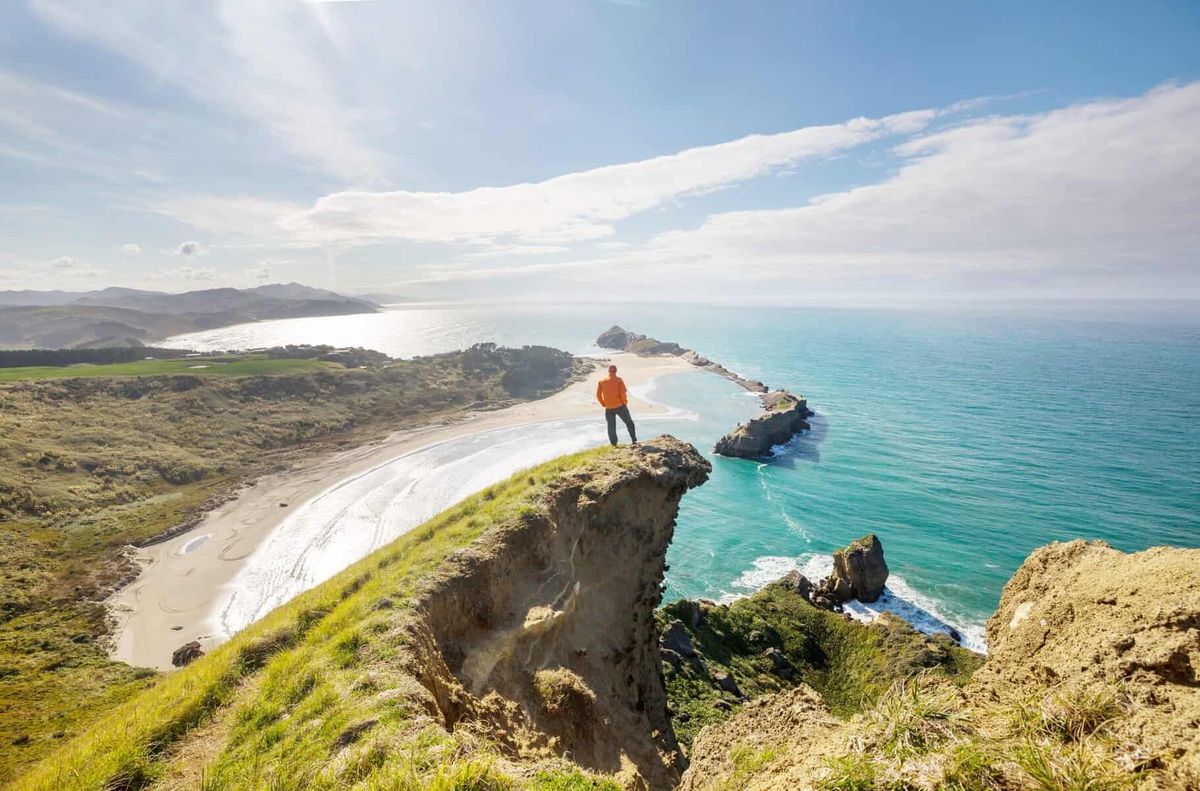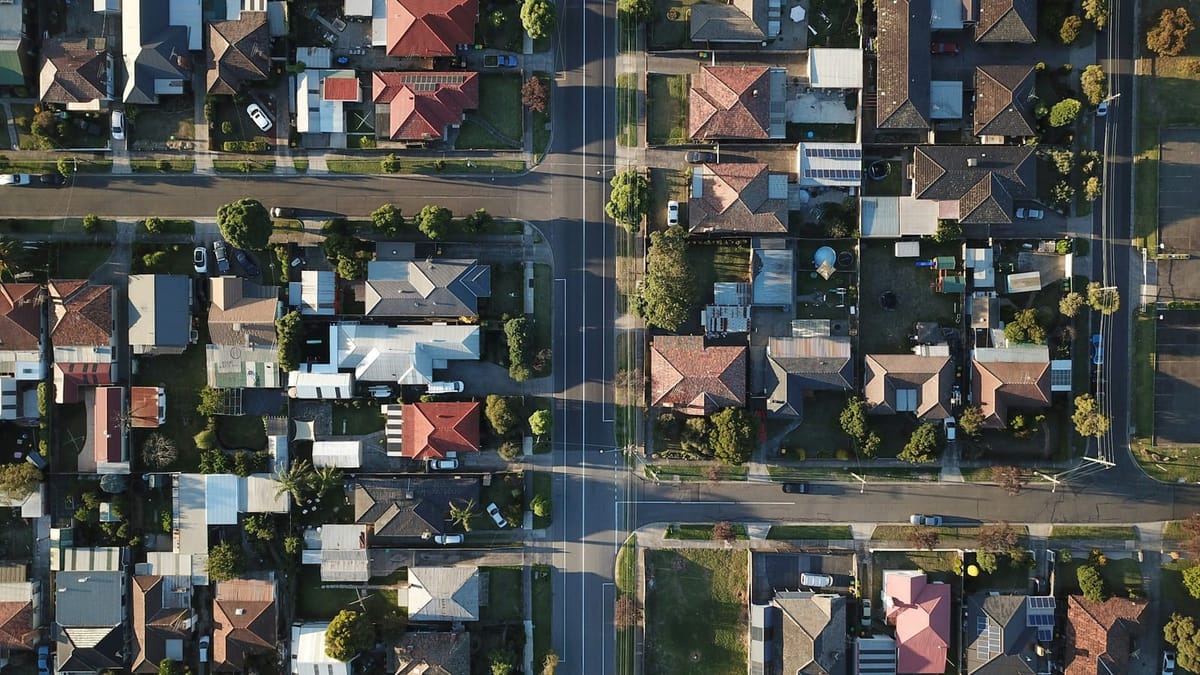
If your picture of Australia is Bondi Beach, the Opera House and a kangaroo hopping past a red-dirt road, you are not wrong, but you are looking through a very small window. If you are going to live there, not visit for two weeks, the Australia that matters is usually quieter, more suburban, more spread out, and much more ordinary.
What happens after the postcard?
The postcard version of Australia is useful for the first coffee-table conversation.
Sydney Harbour. The surf. The big blue sky. Maybe Uluru, even if it is nowhere near where most people will ever live.
But migration is not a postcard. It is school drop-off, a supermarket you can afford, a GP appointment, a rental inspection, and the question of how long it takes to get home after work.
I say this gently, because I understand the pull of the image. Before you move, you need symbols. They help you explain the decision to yourself and to everyone watching from home. Australia is especially good at symbols.
But the real life is built somewhere else.
Often it is built in an outer suburb, where the houses have garages, the streets are wide, the commute is not romantic, and the weekend might mean Bunnings, football, laundry, and a barbecue with neighbours who also arrived from somewhere else.
That is not failure. That is life.
Why do so many migrants end up in the suburbs?
Because suburbs are where families can breathe.
Not always easily, and not always cheaply, but more realistically than in the parts of Australia that make the travel brochures. The inner city can be exciting, but it is rarely the whole story for a new migrant family. Rent, schools, transport, work location, childcare, and space start to matter very quickly.
There is a particular rhythm to outer-suburban Australia. The morning roads fill early. People leave before the sun gets too high. Houses sit behind low fences or no fences at all. Lawns can be dry, green, perfect, neglected, or all four in the same street. The shopping centre becomes the meeting point. The local playground tells you more about the suburb than any glossy relocation guide.
The old idea of the quarter-acre block still floats around in the Australian imagination. In some places it still exists. In others it has become a smaller block, a townhouse, a unit near a train line, or a new estate where the trees are still too young to give shade.
It can feel very normal.
That is exactly the point.
When I speak with people about Australia, I often have to move the conversation from “Where would I go on holiday?” to “Where could I actually live on a Tuesday?” I wrote more about that difference in where to actually live, not visit, because it changes almost every decision.
What about regional cities?
Regional Australia is not one thing.
Some places feel like large country towns. Some are proper cities with hospitals, universities, busy roads, and a strong sense of their own identity. Some are growing fast. Some feel far away in a way that is hard to understand until you have driven for hours and the landscape has barely changed.
There is real work in many regional areas, especially in health, trades, agriculture, construction, logistics, education, and care work. I am not saying this as a visa rule or a promise. I am saying it as a practical observation about how these places keep functioning. Regional communities need nurses, mechanics, electricians, aged-care workers, teachers, farm workers, drivers, and people who can turn up reliably.
The trade-off is also real.
You may have fewer restaurant choices. Flights may cost more. Specialist medical care may mean travel. If your family is overseas, the distance can feel bigger from a regional town than from Sydney or Melbourne, even when the map says otherwise.
But the reward can be strong too. Shorter local routines. People noticing you. Children settling into schools where they are known by name. A sense that your work matters because the community is not abstract.
This is where the postcard really starts to fade, and something better can appear.
Why does Adelaide surprise people?
Adelaide is often underestimated.
People talk about Sydney, Melbourne, Brisbane and Perth first, then remember Adelaide later, almost apologetically. I think that is unfair. Adelaide can be a very sensible place to land if you want a calmer Australian life without feeling cut off from culture, food, beaches, universities, hospitals, and work.
It has a slower feel than the bigger east-coast cities. Not sleepy, just less frantic. The city is easier to understand. The hills are close. Wine country is close. The sea is close. There is a human scale to it that many migrants only appreciate after they have lived somewhere more exhausting.
Affordable is a word people use carefully now, and I will use it carefully too. Adelaide is not magically cheap. Nowhere useful is. But compared with the emotional and financial pressure of some larger cities, many people find it more manageable.
It may not impress relatives back home in the same way as “Sydney” does.
You are not moving for relatives back home.
And Perth?
Perth is its own chapter.
It is sunny, spacious, and often linked with strong earning potential in industries tied to resources, construction, health, trades, engineering, and services around them. It can feel confident in a very Western Australian way. The beaches are beautiful, the light is sharp, and the sky can feel enormous.
But Perth is far away.
Not just a little far. Properly far. The east coast is a flight away. Europe is a long way away. New Zealand is not around the corner either. If your life depends on frequent visits to family, you need to think about that honestly before you fall in love with the sunshine.
For some people, the isolation is the price of a better working life. For others, it becomes heavy. Both can be true.
This is why I do not like ranking cities as if there is one winner. A city is only good if it fits your life.
What does regional Queensland feel like?
Regional Queensland has its own pull.
There is heat, space, work, coastline in some places, inland toughness in others, and communities that are very different from the big-city idea of Australia. Cairns is not Toowoomba. Townsville is not Mackay. Bundaberg is not Mount Isa. The distances matter, and the climate matters even more.
Heat is not just a background detail. It changes the day. You plan errands differently. You learn shade. You understand air conditioning as part of infrastructure, not luxury. The sun can be harsh, and Australia takes sun safety seriously for a reason. If you are new to this climate, it is worth reading the basics from Cancer Council Australia on sun protection.
Regional Queensland can be generous, practical, and direct. It can also feel rough around the edges if you expected café-lane Melbourne with palm trees. Again, not worse. Just different.
And different may be exactly what your family needs.
Is the ordinary Australia a disappointment?
I do not think so.
The ordinary Australia is where life becomes possible. Not always easy, not always pretty, and not always what you imagined when you were scrolling through photos late at night. But livable.
It is the school office knowing your child’s name. The neighbour lending a ladder. The long commute that slowly becomes podcast time. The dry grass, the hot steering wheel, the Saturday sport, the regional hospital, the tradie ute, the library, the beach you visit after work because you live close enough, not because you are on holiday.
It reminds me of how people sometimes misunderstand New Zealand too. They imagine Queenstown and Milford Sound, then build a life in Christchurch, Hamilton, Tauranga, Dunedin, or a smaller town where the weekly routine is the real gift. I wrote about that quieter kind of belonging in the two quiet corners, and I think Australia has its own versions of that too.
Tasmania. Adelaide. Regional Queensland. Outer Perth. The edge of Melbourne. A town you had never heard of before a job came up.
Not the postcard.
Maybe better.
Because when you migrate, you do not need a country to perform for you. You need it to hold your normal life, with all its washing, paperwork, tired Tuesdays, school lunches, work boots, and small hopes.
That is the Australia worth looking for.
Suzanne