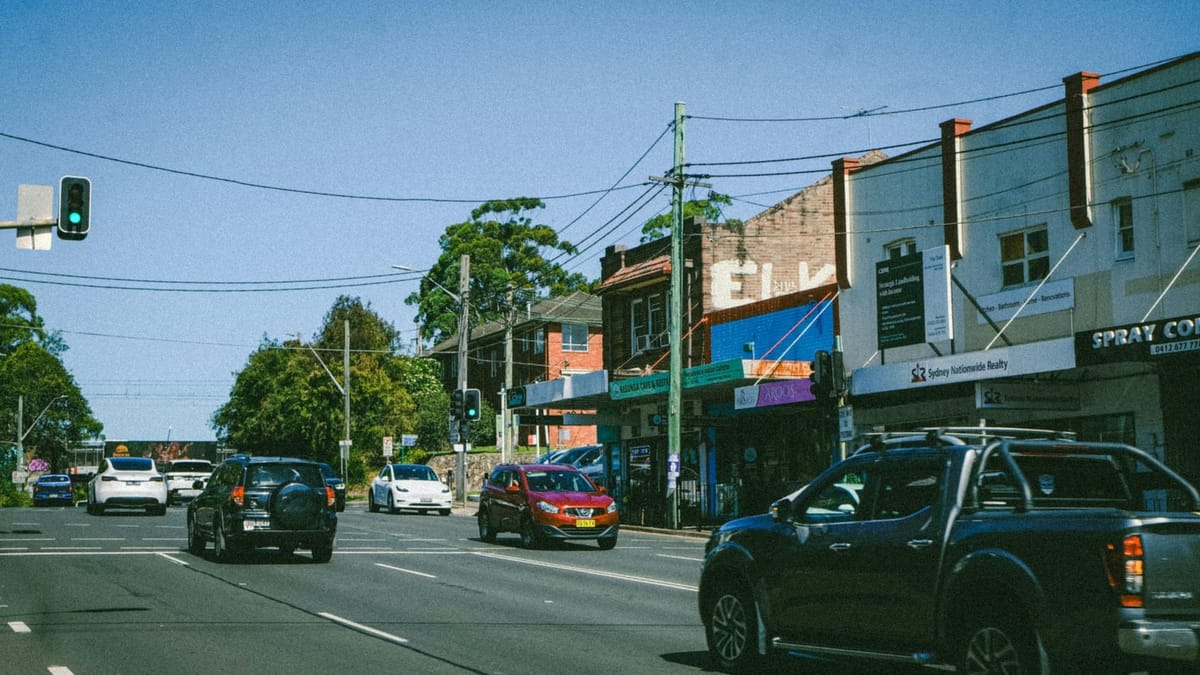
You can fall in love with a place in three days, especially if the sun is out and someone else is making the bed. Choosing where to live is different, because real life happens on an ordinary Tuesday.
What does an ordinary Tuesday tell you?
A holiday shows you the skyline, the waterfront, the nice café, the one street everyone photographs.
A Tuesday shows you the commute.
It shows you what it feels like to leave home in the dark in winter, or arrive at school already sweating in summer. It shows you whether your job exists there, whether your children can get to activities without everyone living in the car, and whether the version of yourself you imagined overseas can actually breathe in that city.
I have moved countries with a family, not just suitcases. I know the difference between looking at a place and living inside it.
So if you are choosing across Australia and New Zealand, I would not start with the postcard. I would start with the life you already live, and the one you are honestly trying to build.
Auckland?
Auckland is often the first New Zealand city people picture, and for good reason. It is busy, diverse, and full of work compared with many other parts of the country. If your career needs a bigger market, Auckland may be where the opportunities are most visible.
It is also expensive, and it can feel spread out in a way that catches people by surprise. You may look at a map and think two suburbs are close, then discover that traffic has its own personality. The school run, the motorway, the weather, the parking, they all become part of the decision.
What I like about Auckland is its mix. You hear different languages in the supermarket. You can live near beaches, bush walks, cafés, and business districts, sometimes all in the same week. But Auckland asks something from you. It asks for patience, a realistic budget, and a tolerance for busyness.
If you are still trying to understand the broader rhythm of life here, I wrote more personally about what New Zealand is really like to live in. Auckland is one version of that story, not the whole country.
Wellington?
Wellington is smaller, sharper around the edges, and very much itself.
It is windy. Not “take a nice scarf” windy, but “learn how to walk into it” windy. Some people laugh and adapt. Some people never quite forgive it.
The good part is that Wellington can feel wonderfully human-sized. It is walkable in ways that many larger cities are not. The hills, harbour, cafés, theatres, public sector offices, and tech workplaces sit close together. If you like ideas, politics, design, code, books, and people who care about good coffee, Wellington can feel alive.
The trade-off is scale. Smaller can mean easier, but it can also mean fewer options in some industries. Housing can be tricky. The weather shapes your mood more than you expect. And because it is compact, you may feel the limits sooner if you are used to a big-city sprawl.
For some families, Wellington is a beautiful fit. For others, it is a brilliant weekend and a hard winter.
Christchurch?
Christchurch has a different feeling. It is flatter, wider, and in many ways calmer. The sky feels bigger. The mountains feel closer. The city has been rebuilt and reshaped, and you can still sense that history in the streets.
For people coming from busy places, Christchurch can feel like an exhale. It may be easier to imagine a house, a garden, a bike ride, a weekend drive to the hills or the coast. It can feel more manageable than Auckland, especially if you want South Island space without living too remotely.
But quieter does not mean automatically easier. Your job still matters. Your industry still matters. Some careers have fewer openings there than in the larger centres, and you need to check that before falling in love with the light and the mountains.
Christchurch is the kind of place where ordinary life can be very good if your work, school, and social world line up. If they do not, the beauty alone will not fix it.
Brisbane?
Brisbane often attracts people who want warmth, space, and an outdoor life. It is growing, confident, and more relaxed in its body language than Sydney or Melbourne. You can feel that in the river walks, weekend markets, suburban backyards, and the way people talk about getting outside.
The climate is a real part of the decision. Warm winters can be wonderful, especially if you are tired of grey weather. But humid summers are not a small detail. They affect sleep, exercise, school pick-up, clothing, and how often you want to be outside in the middle of the day.
Brisbane can be a strong choice if your work fits the city and you like a lifestyle that leans outdoors. It can feel less intense than Sydney and less layered than Melbourne, while still having the energy of a city that is changing.
But do not choose it only because a holiday felt sunny. Ask yourself how you handle heat. Ask where you will work. Ask what suburb life looks like when the novelty wears off.
Melbourne?
Melbourne has culture in its bones. Food, coffee, sport, music, galleries, laneways, neighbourhoods with strong personalities, it is all there. If you like a city that feels layered, social, and full of choice, Melbourne can be deeply appealing.
It is also a big city. That means more options, but also more distance, more competition, and more planning. The weather has a reputation for changing quickly, and that is not just a cute line people say to visitors. You may leave home dressed for one season and come back in another.
Melbourne can be brilliant if you want variety and you are comfortable with scale. Different suburbs can feel like different worlds, so where you live matters enormously. Your experience of Melbourne will not just be “Melbourne”. It will be your tram line, your school zone, your commute, your local shops, your weekend rhythm.
I would happily visit Melbourne for the food alone. Living there, I would choose by weekday logistics first, then by charm.
Sydney?
Sydney is spectacular. There is no point pretending otherwise. The harbour, the beaches, the light on the water, the ferries, the cliffs, the sheer beauty of it can still stop you mid-sentence.
But Sydney is also expensive and demanding. Long commutes can become a normal part of life. Housing choices can involve difficult compromises. The city can give you world-class moments on a Sunday and then test your patience before breakfast on Monday.
For some careers, Sydney makes sense. It is large, international, and full of serious professional networks. If your work is there and your income fits the life you want, Sydney can be extraordinary.
But if the harbour is the only reason, be careful. A view does not do the grocery run. A beach does not shorten the commute. A beautiful city still has to fit your weekday life.
How do you choose without ranking them?
I would not rank these cities, because people do not live rankings. They live routines.
Start with work. Is your profession actually there, in a form that fits your experience? Then look at housing, not as a fantasy search, but as a real question of where you could live and how your days would move from there.
Think about schools if you have children. Think about whether you need public transport, a second car, family nearby, a strong cultural community, quiet weekends, or a bigger professional scene.
And be honest about weather. July in Wellington is not July in Brisbane. A humid Brisbane summer is not a crisp Christchurch morning. Melbourne’s mood is not Auckland’s humidity. Sydney’s beauty does not cancel out its scale.
If New Zealand is on your list, it also helps to understand how work feels day to day, not just what the job title says. I wrote about what work is actually like in New Zealand because workplace culture can shape your happiness as much as the city itself.
What would I tell a friend?
I would say, visit if you can, but visit badly.
By that I mean, do not only do the lovely parts. Drive the commute at the wrong time. Walk around a suburb after school. Go to a supermarket. Sit in a normal café away from the waterfront. Notice if you feel calm, trapped, curious, lonely, excited, or tired.
A city does not need to be perfect. It needs to match enough of your real life that the hard days still make sense.
The best city is the one that fits the life you actually live, not the one that photographs best.
Suzanne